
A normal FSH result does not rule out perimenopause. The hormone swings from one cycle to the next, so an ordinary ovulatory cycle can produce a reading no different from one taken ten years earlier. What the result is worth also depends on your age, because UK guidance treats a test at 44 and a test at 46 quite differently.
You went in with symptoms. You came out with a printout saying your levels sit inside the reference range, and the conversation ended there. It is worth knowing what that piece of paper was actually able to answer.
What does a normal FSH result actually mean?
Follicle stimulating hormone, or FSH, is the signal the pituitary gland sends to the ovaries. As ovarian follicle numbers fall, that signal tends to rise. This is why FSH became the standard menopause blood test in the first place.
The number on your report is compared against a reference range built from a population, not from you. For a woman who is still having periods, that comparison is usually against premenopausal values. The European Menopause and Andropause Society states the practical threshold plainly in its 2022 Menopause Essentials briefing on diagnostic tests: menopausal women have FSH levels above 30 IU/L.
Notice what that threshold is for. It marks menopause, and no guideline body defines an equivalent number for perimenopause. So a result inside the range answers the question does this look postmenopausal, which is not the question most people book the appointment to ask.
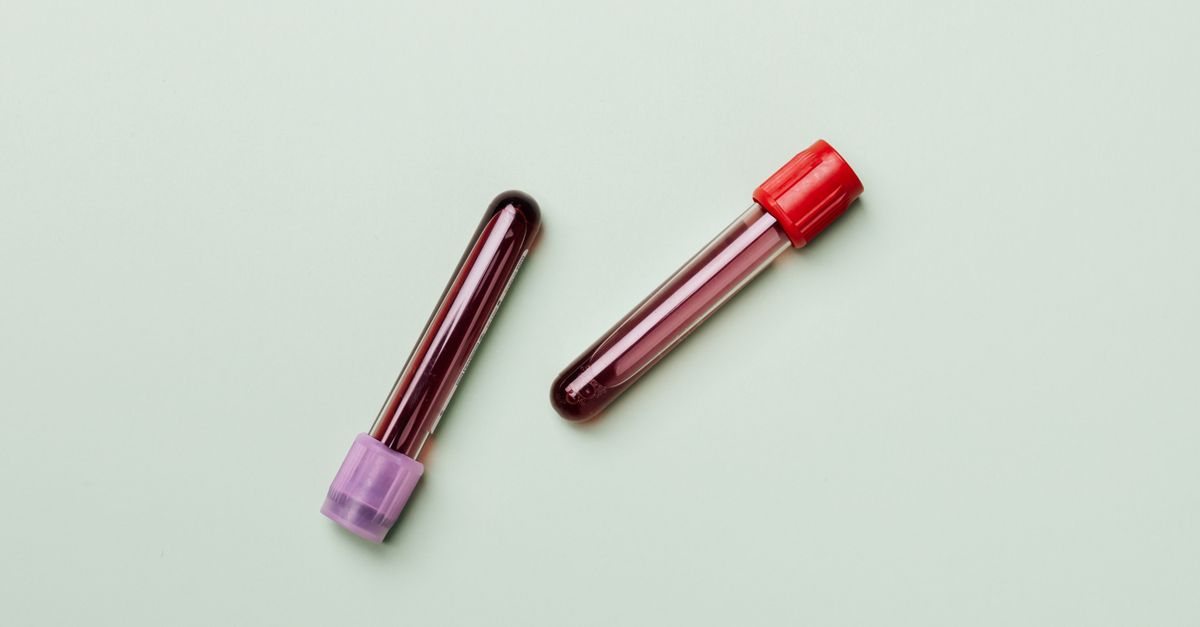
Why can FSH read normal when you feel anything but?
Because on a good cycle, it genuinely is normal. This is the part that rarely gets explained.
A 2004 study in the Journal of Clinical Endocrinology and Metabolism followed 13 healthy women approaching menopause, taking blood three times a week for four weeks every year, for between four and nine years before their final period. The researchers sorted the cycles into two kinds. Ordinary ovulatory cycles showed no change in hormone profile across the entire period. What shifted was the proportion of cycles that were the other kind, the prolonged ones with raised FSH, which rose to 62% of cycles in the last ten before menopause. This was a small sample of 13 women, so the proportions are not population figures.
Put simply: for years, some of your cycles look exactly as they always did, and some do not. A blood test samples one day of one of them.
Reviewing the endocrine data in Recent Progress in Hormone Research in 2002, Henry Burger and colleagues concluded that the perimenopause is a time of markedly fluctuating hormone levels, and that attempts to define menopausal status purely on the basis of single measurements of FSH or oestradiol are unlikely to yield useful information.
He returned to it in Menopause International in 2011, noting that 40% to 60% of cycles in the late transition are anovulatory, and that ovulatory cycles carry endocrine characteristics that are not specific to any one stage.
Is my oestrogen supposed to be low?
Not necessarily, and this is where the popular account of perimenopause parts company with the measurements. A 2009 study in Menopause sampled 77 women three times a week across more than a full cycle. In 11 of the 29 ovulatory cycles from women in the early and late transition, so 37% of them, oestradiol rose a second time during the luteal phase, a pattern the authors named a luteal out of phase event. Those cycles also carried higher early cycle FSH and lower luteal progesterone, and were linked to unusually short or unusually long cycles.
So oestradiol during the transition can be high, low, or unremarkable, sometimes within the same few months. A single oestradiol figure inside the reference range tells you about that morning.
Does my age change what the test result is worth?
Substantially, and this is the detail most often lost. NICE guideline NG23, last updated on 7 November 2024, does not give one rule about hormone testing. It gives different rules by age.
| Your age | How NICE says perimenopause or menopause is identified | Where a blood test fits | Recommendation |
|---|---|---|---|
| Under 40 | Menopause suspected on clinical grounds | Serum FSH may be used where menopause is suspected | 1.3.6 |
| 40 to 45 | Menopause associated symptoms, including a change in the menstrual cycle | NICE says to consider serum FSH to confirm | 1.3.6 |
| 45 and over | Recently started vasomotor symptoms plus any change in the menstrual cycle | Identify without laboratory tests | 1.3.1 |
| 45 and over, tests NICE names as not to be used | Not applicable | Anti Mullerian hormone, inhibin A, inhibin B, oestradiol, antral follicle count, ovarian volume. FSH is not on this list in the 2024 text | 1.3.4 |
| Any age, using combined oestrogen and progestogen contraception or high dose progestogen | Harder to identify while on hormonal treatment | FSH is not to be used | 1.3.5 |
If you are 42 and were offered an FSH test, that was guideline consistent. Recommendation 1.3.6 says to consider one in people aged 40 to 45 with menopause associated symptoms including a cycle change. A great many articles state flatly that hormone testing is useless for perimenopause. For the 40 to 45 band, that is not what the guideline says, and if you have been told you are too young for perimenopause, the age bands are worth reading closely.
The sources also disagree here, and that is worth naming rather than smoothing over. The British Menopause Society tool for clinicians, published in March 2025, states that blood tests are rarely required to diagnose perimenopause or menopause in women aged 45 or over and should not be used, adding that FSH levels fluctuate significantly and bear no correlation to the severity or duration of symptoms. The 2015 version of NG23 also carried standalone wording against serum FSH above 45. That sentence is not in the 2024 update, where the list of tests not to use above 45 does not name FSH at all. The older wording is still widely quoted in local NHS guidance and health articles, so you may meet both versions in one afternoon of searching. Guidance bodies reading the same evidence and landing in different places is not unusual in this field, and where the guidelines disagree about low mood in perimenopause is another place it happens in the open.
Why is every search result trying to sell me a hormone test?
Search this question and most of the first page is published by companies selling hormone panels, at home kits or menopause subscriptions. The pages explaining whether you need a test are largely written by the people selling it.
There is now peer reviewed evidence on those products. A cross sectional review published in the BMJ in 2025 examined self tests on sale in UK supermarkets, pharmacies and health shops. Researchers identified 35 tests and obtained 30 of them, covering 20 different biomarkers. Four of the thirty were menopause tests, and all four measured FSH in urine.
- Two of the four carried claims of over 99% accuracy on the box. The supporting figures came from comparison against another commercial rapid test, not against a clinical reference standard.
- The lay person study for those two tests used 105 women, of whom 59% were aged 20 to 40, and 62% had had a period within the previous two months. The authors described the group as unrepresentative of those likely to purchase a menopause test.
- Across the whole sample, 18 of the 30 tests carried at least one high risk usability or safety concern. The four menopause tests accounted for 7, 4, 8 and 10 concerns respectively.
- The authors concluded that the findings highlight the need for improved regulatory oversight and clearer standards for self tests on the UK market.
The picture is similar one step up the market. A 2023 study in JAMA Network Open analysed 27 websites across seven countries selling anti Mullerian hormone tests directly to consumers: 96% stated the test indicates ovarian reserve. AMH is one of the tests NICE names as not to be used to identify menopause in people aged 45 and over.

Can oestradiol, AMH or a home kit settle it instead?
| Test | What it measures | Where guidance places it | What a result inside the range rules out |
|---|---|---|---|
| Serum FSH | The pituitary signal to the ovaries | NICE: consider at 40 to 45 with symptoms including cycle change, and under 40 where menopause is suspected. Not part of identification at 45 and over | It does not exclude perimenopause. Levels swing between cycles, and the common threshold marks menopause, not the transition |
| Oestradiol | The main circulating oestrogen | NICE names it among tests not to be used at 45 and over. EMAS states oestradiol is of no value in diagnosing ovarian failure | Very little. Oestradiol can run high as well as low during transition cycles |
| Anti Mullerian hormone | A marker of the remaining follicle pool | NICE names it among tests not to be used at 45 and over. EMAS lists it as a marker used in assessing premature ovarian insufficiency | It is not a menopause identification test in UK guidance, whatever a site selling it says |
| Urine FSH self test | FSH concentration in urine, read as a line or a colour | Not part of any guideline pathway reviewed here | The BMJ review found accuracy claims validated against another commercial test, in a group unrepresentative of likely buyers |
If a blood test cannot settle it, what does?
The route NICE describes for people aged 45 and over contains no laboratory value at all. It is recently started vasomotor symptoms together with any change in the menstrual cycle. That makes the history the material, which is a different kind of preparation from waiting for a number.
The research staging system behind much of this, STRAW+10, compares consecutive cycle lengths rather than comparing a cycle to your usual pattern. Its entry point for the early transition is a persistent difference of seven days or more between consecutive cycles, recurring within ten cycles. That is why the first day of each bleed is the useful thing to have written down. It is a staging definition applied by clinicians to a cycle history, not a home test returning a verdict.
It also does not fit everyone. STRAW+10 states that women who have had a hysterectomy or endometrial ablation cannot be staged by bleeding criteria, and that the cycle criteria do not apply in polycystic ovary syndrome or primary ovarian insufficiency. Symptoms are the other half of the picture, and the most commonly reported ones are not the ones people expect: fatigue and exhaustion are reported far more often than hot flashes. Being still having regular periods does not settle the question either, and it is worth knowing what age perimenopause actually starts before assuming you are outside the window.
When is a hormone test genuinely the right call?
There are situations where guidance points towards testing rather than away from it. Under 40, where menopause is suspected, NICE recommendation 1.3.6 covers serum FSH, and both EMAS and the British Menopause Society are explicit that this diagnosis should not rest on a single blood test: EMAS specifies two samples taken four to six weeks apart. Between 40 and 45 with symptoms including a cycle change, NICE says to consider the test. On combined hormonal contraception or high dose progestogen, recommendation 1.3.5 says FSH is not to be used at all.
Several other conditions also produce symptoms that overlap closely with the transition, and a clinician may want to look into those before settling on an explanation. The same caution applies to sore joints, where joint pain in perimenopause and the arthritis it can look like covers the features that point somewhere else. A persistent itch is another where the alternatives matter, which is why perimenopause itchy skin and that crawling sensation sets out the causes the NHS says are worth ruling out before hormones are assumed.
None of this makes a normal result meaningless. It makes it narrow. It tells you that on the day of the draw, that hormone sat inside a population range, and that you did not look postmenopausal. Everything else the appointment was about is still open.
What has changed since this was first published?
Rechecked on 20 September 2026. What changed is not the guidance. It is what this page gives you to check it against.
- Every source named on this page is now linked at the point where it is used. NICE NG23, the EMAS briefing, the British Menopause Society tool and the four studies. A named source with no link is one a reader cannot check, and on a page whose whole argument is about being careful whose numbers you trust, that was the wrong shape for it to be in.
- The British Menopause Society has published newer material since the March 2025 tool quoted above. Its Menopause Practice Standards are dated June 2026. This page still quotes the March 2025 tool, because that is the document its wording came from and we have not restated it against the newer one. The newer standards are linked so you can read them alongside rather than instead.
- Nothing in the guidance itself moved. NG23 is still at its 7 November 2024 update, the age bands in the table above are unchanged, and the 2015 wording against FSH testing above 45 is still absent from the current text while still circulating widely in local NHS documents and health articles. Rechecked 20 September 2026.
Frequently asked questions
Can a blood test diagnose perimenopause?
Not on its own. NICE guideline NG23 identifies perimenopause in people aged 45 and over without laboratory tests, using recently started vasomotor symptoms plus any change in the menstrual cycle. For people aged 40 to 45 with symptoms including a cycle change, NICE says to consider a serum FSH test to confirm, so the answer genuinely differs by age band.
What does a normal FSH result actually rule out?
Less than it sounds. The commonly used threshold, given by EMAS as FSH above 30 IU/L, marks menopause rather than the transition, so a result inside the range mainly indicates that you do not look postmenopausal on that day. No guideline body defines an FSH number that marks perimenopause.
Why can my oestrogen be normal or even high?
Oestradiol does not simply decline through the transition. In a 2009 study in Menopause, 11 of 29 ovulatory cycles from women in the early and late transition, some 37%, showed a second oestradiol rise during the luteal phase. Levels can run high, low or unremarkable within the same few months.
Does NICE say FSH testing is wrong at 42?
No, and this is a common misreading. Recommendation 1.3.6 says to consider serum FSH in people aged 40 to 45 with menopause associated symptoms including a change in their menstrual cycle. The 2015 version of the guideline carried separate wording against FSH above age 45, which is still widely quoted, but it is not in the November 2024 update.
Are high street menopause tests accurate?
A 2025 BMJ review of UK self tests looked at four menopause tests, all urine FSH. Two carried claims of over 99% accuracy derived by comparison against another commercial test rather than a clinical reference standard, and validated in a group of 105 women the authors called unrepresentative of likely purchasers, 59% of whom were aged 20 to 40.
If the test cannot settle it, what is worth bringing to an appointment?
The material the guidance itself uses: the first day of each bleed over recent months, what has changed, and roughly when it started. STRAW+10 staging compares consecutive cycle lengths, looking for a persistent difference of seven days or more, so recorded start dates carry more information than a general sense that cycles feel irregular.
This article is general information, not medical advice, and is not a substitute for care from a qualified healthcare professional. Speak to your doctor about your own situation.

Leave a Reply