
Perimenopause and diet research is thinner than the food lists suggest. One randomised trial, WAVS, cut moderate to severe hot flushes by 88% with a low fat vegan diet and daily soybeans, but it enrolled only postmenopausal women. The Menopause Society still does not recommend diet changes for hot flushes. Food matters most for bone and heart.
Every food list for this search serves the same menu: leafy greens, oily fish, soy, oats, a stern word about coffee. Almost none of it arrives with a trial or a number, which is how a plate of broccoli ends up sounding like a treatment. This page sorts the advice by what has been tested, checked against the sources on 21 September 2026.
What has actually been tested on perimenopause and diet?
Diet claims fall into three tiers. First, food tested in a randomised trial for symptoms, mainly hot flushes. Second, food linked to the risks that climb after menopause, bone loss and heart disease. Third, ordinary healthy eating with a menopause label stuck on it. The first tier is almost empty, as the table shows, with the source on every row.
| Claim you will see | Best evidence found | Tested in the transition? | Source |
|---|---|---|---|
| Low fat vegan diet with daily soybeans reduces hot flushes | Two small randomised trials, 38 and 84 women, 12 weeks, unblinded | Postmenopausal women only, 1 to 10 years after the last period | Barnard et al., Menopause 2023 |
| Dietary modification in general eases hot flushes | Rated Level III, not recommended | Reviewed across stages; trial evidence called limited | Menopause Society 2023 statement |
| Soy foods ease hot flushes | Mixed trial results; rated Level II, not recommended | Mixed populations, many under 12 weeks | Menopause Society 2023 statement |
| Soya is worth trying for two to three months | Described by the BDA itself as mixed results | General menopause advice, not a trial | British Dietetic Association, April 2025 |
| Avoid alcohol, caffeine and spicy food | No clinical trials of avoidance; rated Level II, not recommended | No | Menopause Society 2023 statement |
| Mediterranean style eating means fewer hot flushes | Observational association in a cohort of 6,040 women, not a trial | Midlife women followed for 9 years | Herber-Gast et al., 2013 |
| Weight loss can ease hot flushes | Rated Levels II to III, recommended, with small or post hoc studies | Effect may be larger earlier in the transition | Menopause Society 2023 statement |
| Calcium rich food protects bone | Bone loss speeds up after menopause; no menopause specific calcium target | Risk based, not symptom based | Royal Osteoporosis Society |
| Diet matters more for the heart after menopause | LDL cholesterol rises sharply within a year of the final period | Yes, tracked across the transition | SWAN, 863 women |
Notice the third column. The one diet with a symptom trial behind it was tested after menopause, and nothing in it says whether the result holds while periods are still coming and going.
What did the WAVS trial find, and who was in it?
WAVS is short for the Women’s Study for the Alleviation of Vasomotor Symptoms, run by Neal Barnard, Hana Kahleova and colleagues. The first WAVS trial, published in 2021, randomised 38 postmenopausal women: moderate to severe hot flushes fell 84% on the diet and 42% in controls.
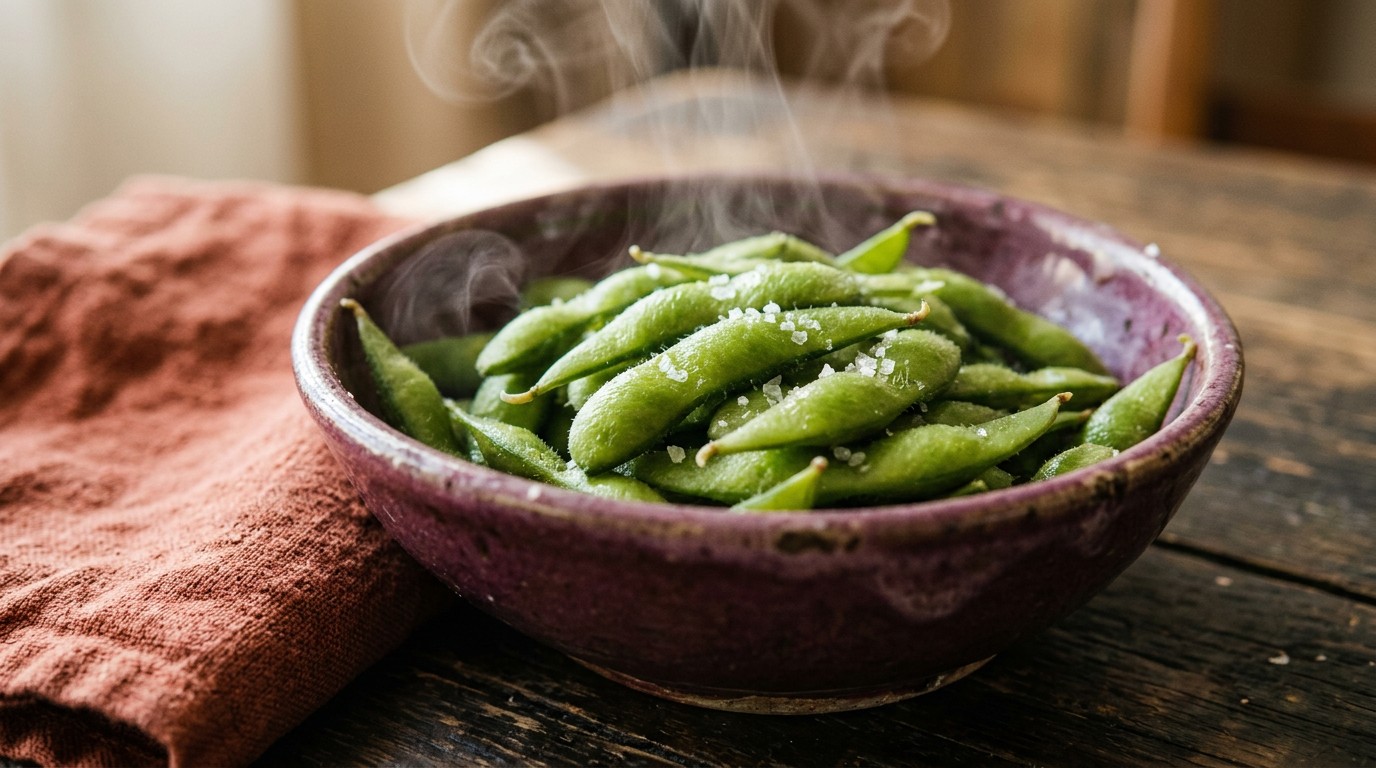
The second, larger WAVS trial randomised 84 women aged 40 to 65, all one to ten years past their last period with at least two moderate to severe hot flushes a day; 71 finished. For 12 weeks the diet group ate a plant based diet low in added oils plus half a cup, 86 grams, of cooked whole soybeans a day, with weekly group sessions over Zoom. Controls ate as usual.
Moderate to severe hot flushes fell from 5.0 to 0.6 a day in the diet group, an 88% drop, against a 34% drop in the controls. Half of those who completed the diet arm had no moderate or severe hot flushes by week 12, against 3% of controls. The diet group also lost 3.6 kilograms on average, against 0.2 in the controls.
Now the fine print, mostly from the paper itself. It was not blinded, because nobody can be fooled about eating soybeans daily. It lasted 12 weeks. The diet, the soybeans and the weight loss arrived together, so no single part can take the credit, and a placebo effect could not be ruled out. It was funded by the Physicians Committee for Responsible Medicine, which campaigns for plant based eating, and it was registered in advance as NCT04587154. None of that makes the result false. It makes it one small, promising, unreplicated trial by an interested group, in a different stage of life from the one this site is about.
Why does The Menopause Society still not recommend diet changes?
Because one trial is not a body of evidence. The Menopause Society’s 2023 nonhormone therapy position statement describes WAVS directly, 88% against 34%, and still concludes that there is limited evidence from clinical trials for dietary modification, rating it Level III, not recommended. It adds that a healthy diet matters for health and chronic disease prevention in general. The same statement rates soy foods and soy extracts Level II, not recommended, because trials disagree and many ran too briefly.
British dietitians read the same literature more warmly. The British Dietetic Association menopause sheet, dated April 2025, calls the soya results mixed on the whole, suggests trying soya foods for at least two to three months, and says negative effects are unlikely. The Menopause Society is grading treatments; the BDA is giving low risk food advice. Neither claims food has been shown to work for perimenopausal hot flushes.
Does cutting caffeine, alcohol and spicy food help hot flushes?
This is where the two bodies disagree most plainly. The BDA sheet lists caffeine, alcohol and spicy foods as things that can trigger hot flushes and says alcohol can make flushes and night sweats worse. The Menopause Society statement notes that one cross sectional study of 4,595 women linked alcohol with hot flushes, that others did not, and that there are no clinical trials of avoiding triggers at all. It rates avoiding them Level II, not recommended.
Not recommended here means unproven, not harmful. The honest framing is a personal experiment rather than a treatment: change one thing, note your hot flash symptoms for two weeks, and see whether your own pattern shifts. Our piece on why hot flashes are worse at night covers the evening side.
What can food do for the risks that rise after menopause?
Food has its strongest case here, and it is about risk rather than symptoms. The Royal Osteoporosis Society explains that bone is lost faster for some years after menopause, gives the UK adult calcium figure as 700 mg a day, and says there is no separate target for menopause. The US National Institutes of Health calcium fact sheet sets 1,200 mg a day for women over 50. Both are population reference values, not a personal prescription.
Then the heart. The American Heart Association’s 2020 scientific statement treats the transition as a window for early prevention. In the SWAN study of 863 women, LDL cholesterol climbed substantially within a year either side of the final period, and those changes predicted later measures of the neck arteries. That is the case for the dull Mediterranean style plate: less about tonight’s flush, more about your arteries at 65.
Which diet advice is ordinary healthy eating with a new label?
Most of it. Leafy greens, oily fish, whole grains, beans and olive oil are sound advice at 30, 45 and 70, and no trial has shown any one of them eases a perimenopausal symptom. The same goes for the 25 to 30 grams of protein a meal that several pages print with great confidence: no source found derives that figure from women in the transition.
Weight is the exception. The Menopause Society rates weight loss recommended for some women, Levels II to III, while noting the studies are small or post hoc. What drives perimenopause weight gain explains why the scales move in this decade. If the change is swelling that comes and goes within a day rather than steady gain, read about perimenopause bloating and digestive symptoms before rearranging the fridge.
A large change in diet, such as going fully vegan, is worth talking through with a dietitian or GP first, especially with a health condition, a history of disordered eating, or a soy allergy. The WAVS diet was supervised, with weekly sessions.
What do people who changed their diet actually report?
We read three public Mumsnet threads, 71 posts in all, from December 2023 to January 2025. These are reports, not evidence.

In a December 2023 thread on non HRT tips, one poster said giving up caffeine left her mood steadier and her afternoon energy slumps gone. Another said that even very moderate drinking left her feeling ratty and low. A third tried to cut both and said she failed on both fronts, which belongs in any honest summary.
In a January 2025 thread on night sweats, one poster said stopping alcohol ended her night sweats. Another, who cut sugar and alcohol, judged it only helps with fairly mild symptoms, and several said prescribed treatment did far more.
The most revealing thread was a December 2023 discussion of the WAVS headline. Of 23 posts, not one reported trying the diet. The replies questioned the messenger instead, pointing out that the funder campaigns for vegan eating.
Where the accounts agree with the guidance: alcohol comes up again and again as a personal trigger, which fits the BDA sheet, and the gains people report are modest, which fits The Menopause Society’s caution. Where they part company: posters talk about mood, energy and sleep far more than hot flushes, the very symptoms nobody has trialled diet against.
Is a soy capsule the same as eating soybeans?
No. WAVS used whole cooked soybeans inside a whole diet. Isoflavone capsules are concentrated extracts with their own trials, mixed results and safety questions. This page stays on food; the capsule question is covered in our look at what the evidence says about perimenopause supplements, and anyone on medication or with a history of hormone sensitive cancer should ask a doctor or pharmacist before taking any of them.
Hot flushes that are breaking your sleep or your working day, new bleeding after periods have stopped, or any unexplained weight loss are reasons to see a doctor rather than to change your diet. Food is not a substitute for that appointment.
Frequently asked questions
Is there a specific perimenopause diet?
No named diet has been tested in perimenopausal women specifically. The best symptom trial, WAVS, used a low fat vegan diet with daily soybeans in postmenopausal women. Most other menopause diet advice is ordinary healthy eating.
How long did the WAVS diet take to work?
Both WAVS trials ran for 12 weeks and reported results at the end of that period. The BDA suggests giving soya foods at least two to three months. Neither tells you what happens after three months, because no longer trial has been published.
Does sugar make hot flushes worse?
No trial has tested cutting sugar for hot flushes. A 2013 Australian cohort linked a high fat, high sugar eating pattern with more hot flushes and night sweats, but that is an association in observational data, not proof that sugar causes them.
Is soy safe to eat in perimenopause?
The BDA says negative effects of soya foods are unlikely for most people. Soy is one of the common food allergens, and anyone with a history of hormone sensitive cancer or on medication is better asking their own doctor than relying on a general article.
Can diet replace treatment for severe hot flushes?
The evidence does not support that. Food changes are low risk and may help some women a little, but hot flushes that disrupt sleep or work are worth discussing with a doctor, who can explain the treatments with stronger evidence.
Do I need more calcium in perimenopause?
The Royal Osteoporosis Society says there is no separate calcium target for menopause; the UK adult figure is 700 mg a day. The US NIH figure for women over 50 is 1,200 mg. A dietitian can check whether your usual diet reaches it.
This article is general information, not medical advice, and is not a substitute for care from a qualified healthcare professional. Speak to your doctor about your own situation.

Leave a Reply