
Write down the start date of every period, not how the period felt. Menopause staging compares the length of consecutive cycles, so start dates are the only entry that turns into a number a clinician can use. Add symptom frequency and severity on a fixed scale, your age, and the one thing that changed most. Two pages, no adjectives.
Search for a perimenopause symptom diary and you get printables that ask you to rate your mood out of ten and colour in a flower. They are pleasant to fill in and produce almost nothing a clinician can act on, because the entry carrying the most information is the one they omit.
There is direct evidence for that gap. Smith-DiJulio, Mitchell and Woods matched six years of prospective menstrual calendars against questionnaires from the same 161 women, 670 matched pairs, in Climacteric in 2005. Agreement on whether cycles had been irregular was weak, a Cohen kappa of 0.192. Agreement on whether periods had been skipped was strong, at 0.711. A skipped period is a countable event. Irregularity is an adjective.
Why do cycle start dates matter more than how the period felt?
Because the research definition of entering the menopausal transition is arithmetic done on start dates. STRAW+10, published in Menopause in 2012, defines entry to the early transition as a persistent difference of seven days or more between the lengths of consecutive cycles, where persistent means it recurs within ten cycles. That threshold came from data. The ReSTAGE Collaboration derived it from pooled prospective calendars across four cohorts, roughly 3,500 women aged 35 to 57, in Fertility and Sterility in 2008.
Two details in that are routinely mangled. It compares consecutive cycles, not your cycle against some remembered normal. And seven days is the threshold. Cycles that moved from 28 days to 24 differ by four and do not meet it, however different that feels. Cycles running 28, 28, 24, 24, 24 have changed a great deal from their own baseline and still contain no seven day gap between consecutive ones.
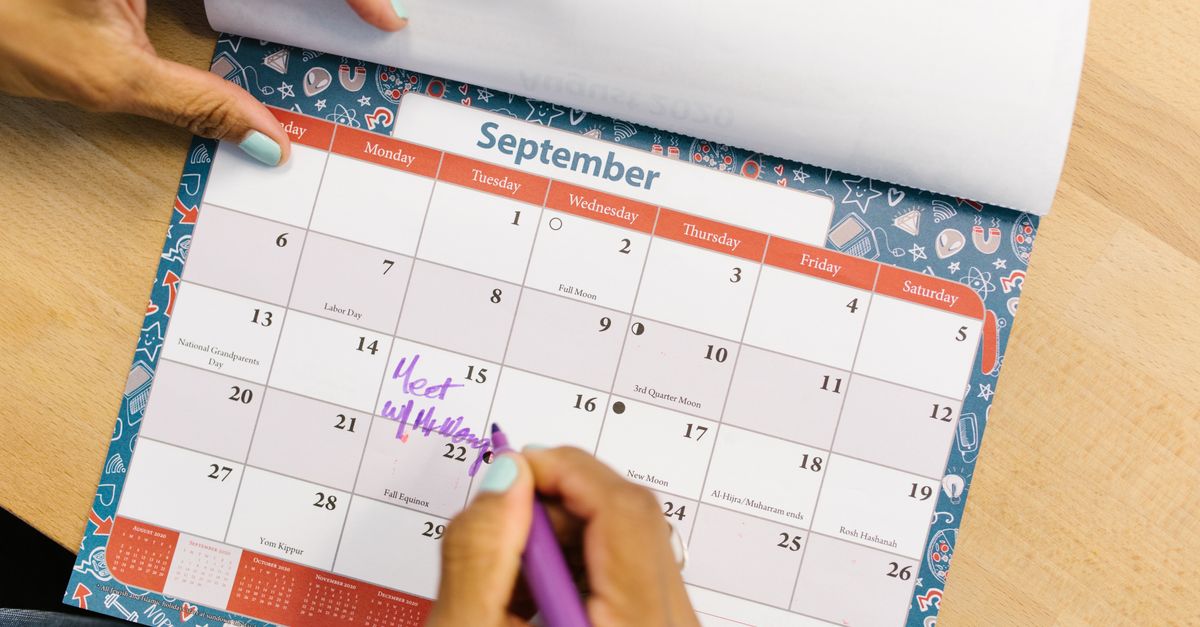
A start date takes two seconds to record and cannot be misremembered later. Cycle length is the subtraction between two of them. Nothing else in the diary has that property.
What is the second date that matters, and why does age change it?
The gap. STRAW+10 marks the late transition by amenorrhoea of 60 days or longer and puts that stage at one to three years. So the second countable event worth recording is any stretch of 60 days or more without bleeding.
Age changes how much one gap carries. A separate ReSTAGE analysis in Menopause in 2010 found that for women aged 40 to 44 the 60 day marker works better when it recurs within the next ten cycles than when it happens once. Over 45, a single 60 day gap performed as well as the older 90 day marker. One long gap at 42 means less than one at 48, a reason to keep recording rather than to stop. In that band, a missed period in perimenopause covers what happens next.
| What most printables ask for | What it produces | What to record instead |
|---|---|---|
| Period start and end, plus flow icons | A picture of one period | Start date only, every cycle |
| Mood rated out of ten | A number nobody can compare | Symptom frequency, counted per week |
| Was your cycle irregular this month | Kappa 0.192 against a real calendar | The dates, so the arithmetic is done for you |
| A tick if you had hot flushes | Presence, not burden | Count per day plus severity on four points |
Which symptoms are worth recording, and which get forgotten?
The ones people forget are the ones they never connected to hormones. The Flo Health and Mayo Clinic survey in Menopause in 2026 asked two groups two questions. Among 17,290 respondents of all ages asked what they expected menopause to bring, hot flashes led at 71.1 per cent, sleep problems 67.5, weight gain 65.2. Among 12,681 respondents aged 35 and over asked what they were experiencing, fatigue and exhaustion came in at 83.2 per cent, irritability 80, digestive symptoms 76.
Those are two different sets of people answering two different questions, not a before and after in one group, and the study did not test the gap for statistical significance. The point is that the symptoms with the highest experience rates are not the ones on the checklist most people carry into an appointment.
So the diary earns its keep on the unglamorous entries: nights you woke, days too tired for what you had planned, times your temper went somewhere you did not recognise, what your gut did, and any episode where you were suddenly aware of your own heartbeat: what a clinician does with perimenopause heart palpitations depends almost entirely on those details. If you have periods that are still regular, these may be the only entries that move. Write the clock time beside each waking rather than a tick, because a 3am waking that comes with no heat at all is a different entry from a night sweat and a clinician reads the two differently.
How do you record severity without guessing?
Borrow the scale the research uses. The daily hot flash diary used in clinical trials records frequency and severity together, severity on four points: mild, moderate, severe, very severe. Four points is enough to show a trend and few enough that you score the same experience the same way in March as you did in January.
Longer instruments show what clinicians are used to reading. The Greene Climacteric Scale runs 21 questions across anxiety, depression, somatic, vasomotor and sexual domains. The Menopause Rating Scale covers 11 symptoms scored zero to four. MENQOL runs to 29 questions. None is a diagnostic test or something to score against a cutoff at home.
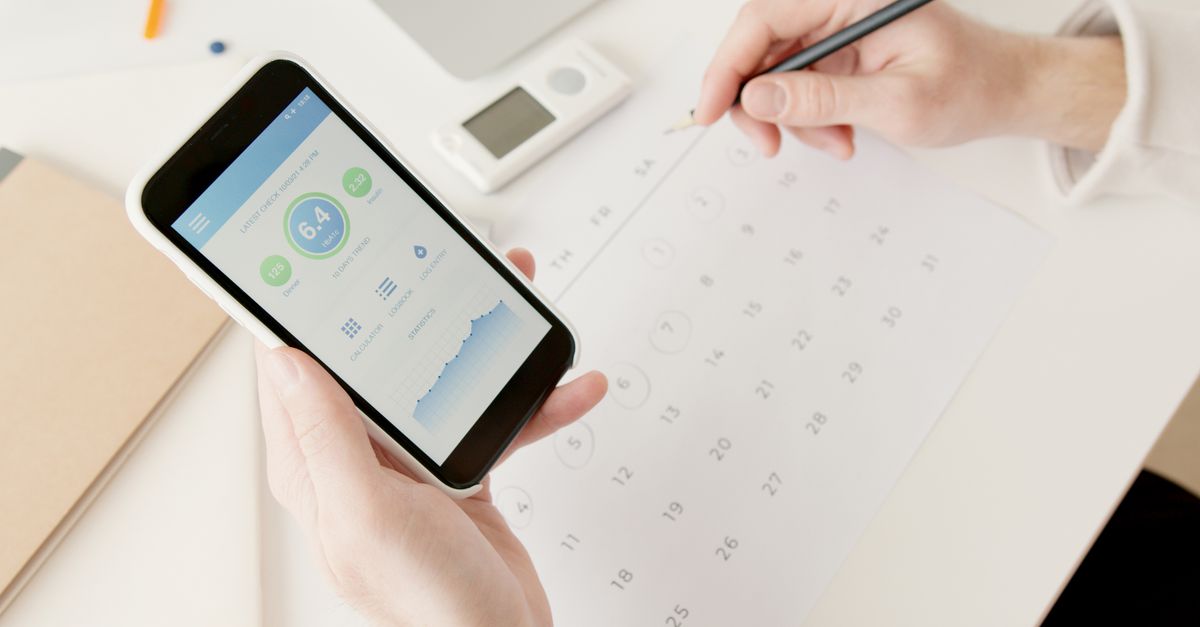
A tracking app does the arithmetic on start dates for you, a real advantage. What it will not do is decide which symptoms belong in the record. Whatever it prompts for is what you log, and that prompt list was written by somebody who has never met you. Aching joints are the usual casualty of that, which is why the guide to what perimenopause joint pain looks like and what to time asks you to record morning stiffness in minutes.
Does the diary change what happens at the appointment?
It changes what fits into it. A 2017 systematic review in BMJ Open covering 178 studies and more than 28.5 million consultations put the average United Kingdom primary care consultation at about 9.2 minutes. That is 2017 data and length varies by country and practice, so treat it as an order of magnitude. Whatever you cannot say in the first two minutes has to arrive on paper.
What guidance does with that paper depends on your age. As of the November 2024 text of the NICE menopause guideline, perimenopause is identified without laboratory tests in otherwise healthy people aged 45 and over who have recently started vasomotor symptoms along with any change in their menstrual cycle. For people aged 40 to 45 with menopause associated symptoms including a cycle change, the same guideline says a serum FSH test may be considered. NICE has been revised more than once and its live recommendations page would not load on the day of writing, so check the current wording at NICE rather than any summary, this one included.
| Your age | What the guideline route looks like | What your diary is doing |
|---|---|---|
| Under 40 | Investigated differently, specialist input usual | Documenting the timeline from the start |
| 40 to 45 | A serum FSH test may be considered alongside symptoms and cycle change | Showing the cycle change that makes the question reasonable |
| 45 and over | Identified clinically, no lab tests, in otherwise healthy people | Supplying the cycle change and symptom history that route runs on |
If a test happens and comes back unremarkable, a hormone test that came back normal explains why. If the answer is that you are too young for this, being told you are too young sets out what the guidelines say about age.
What should a symptom diary never try to do?
Diagnose anything. A diary is a record, not a verdict, and the arithmetic in it does not resolve as cleanly as it looks.
Two examples. First, the frameworks disagree. Under STRAW+10, cycles getting shorter belongs to the late reproductive stage, before perimenopause begins. Under the NICE route for people aged 45 and over, any menstrual change plus recently started vasomotor symptoms is enough, with no cycle arithmetic at all. The same woman with the same diary can be not yet in transition by the research staging system and in perimenopause by clinical guidance.
Second, the staging chart and the cohort data disagree about timing. STRAW+10 places vasomotor symptoms at its late transition stage. SWAN, following 3,302 women, reported in JAMA Internal Medicine in 2015 that women premenopausal or early perimenopausal when frequent hot flushes first appeared had the longest duration, a median above 11.8 years against 7.4 across the sample. Symptoms arriving early is not a sign the diary is wrong.
STRAW+10 also cannot stage women after hysterectomy or endometrial ablation, and cycle arithmetic is meaningless on hormonal contraception. If that is you, no periods to track at all covers what to record instead.
How long should you record before booking?
More than one cycle, because the arithmetic needs two. STRAW+10 uses recurrence within ten cycles as its persistence test, which is not a reason to wait ten cycles before asking anybody anything. It means the diary keeps running after the first appointment, because the second conversation is the one it was built for.
Two pages is enough. A column of period start dates. A count of the two or three symptoms that bother you most, severity on the same four point scale each time. Any gap of 60 days or more, circled. Your age. And one sentence on what you can no longer do that you could do two years ago. That last line is usually the one that gets read.
Frequently asked questions
What exactly should I write down each month for a perimenopause symptom diary?
The start date of every period, which lets anyone calculate cycle length by subtraction. A count of your two or three most troublesome symptoms per week, with severity on a fixed four point scale. Any gap of 60 days or more without bleeding. Your age. One sentence on the change that bothers you most.
Does a shift from 28 day cycles to 24 day cycles mean I am in perimenopause?
Not by the STRAW+10 research definition, which requires a persistent difference of seven days or more between consecutive cycle lengths. A four day shift does not meet it. The NICE clinical route for people aged 45 and over is different and counts any change in the menstrual cycle alongside recently started vasomotor symptoms, so the two frameworks can reach different answers about the same diary.
Is a tracking app as good as writing it down on paper?
For cycle start dates an app is arguably better, because it does the arithmetic and does not rely on memory. The limitation is that you will log what the app prompts for, and its prompt list may not include the symptoms that matter most to you. Either format works if the entries are countable rather than descriptive.
Why does the research keep saying not to rely on memory?
Because it has been measured. Comparing six years of prospective menstrual calendars against questionnaires from the same 161 women, agreement on whether cycles had been irregular was weak at a kappa of 0.192, while agreement on skipped periods was strong at 0.711. Countable events survive recall. Adjectives do not.
What if I have no periods to track because of a coil, the pill or a hysterectomy?
Cycle arithmetic does not apply, and STRAW+10 explicitly cannot stage people after hysterectomy or endometrial ablation. The symptom side of the record still works. Frequency and severity of the symptoms themselves, tracked consistently over months, is what remains available and it is worth recording.
Can a symptom diary tell me whether I am in perimenopause?
No. It is a record of what happened, not an assessment. Staging systems, clinical guidelines and lay usage disagree with each other about where perimenopause starts and ends, and none of them is applied by scoring yourself at home. The diary makes the conversation with a qualified professional faster and more specific, which is the whole of its job.
This article is general information, not medical advice, and is not a substitute for care from a qualified healthcare professional. Speak to your doctor about your own situation.

Leave a Reply