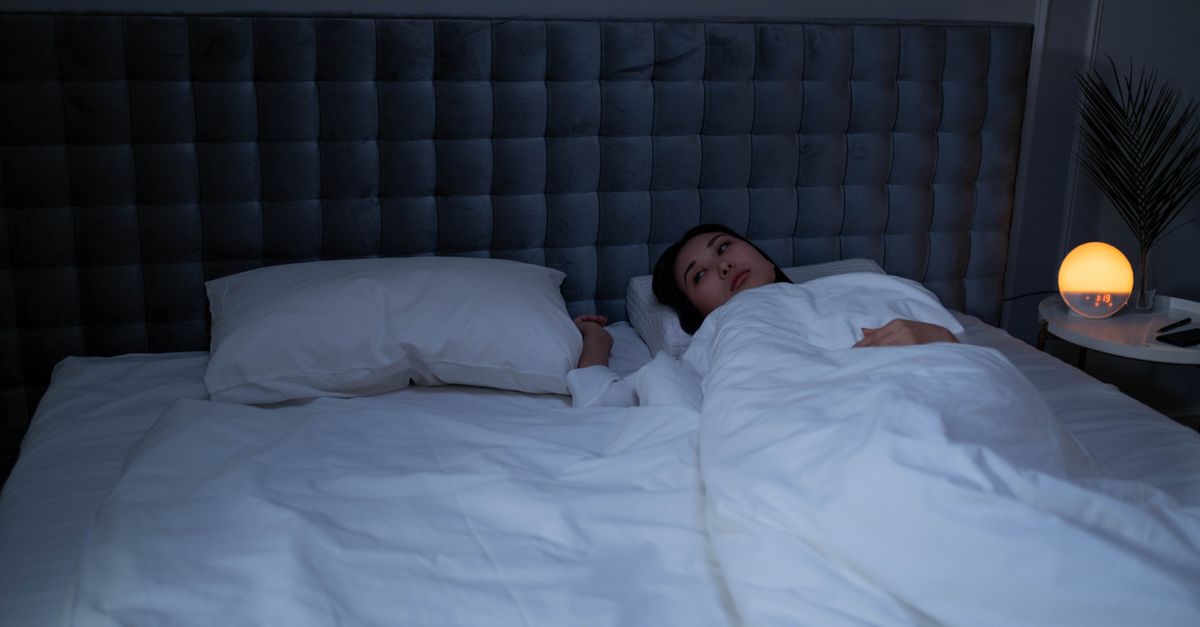
Hot flashes at night, usually called night sweats, are the same hormonal event as a daytime flash. The difference is that you are asleep when it happens, so you cannot see it coming and you cannot do a single thing to head it off. A daytime flash you can manage. You peel off a cardigan, stand near a window, ride it out in a few minutes. At night the flash wakes you, damp or properly soaked, and by the time your body has finished cooling you are lying in cold sheets at three in the morning with your heart going.
The useful news is that night sweats respond well to a stack of small, boring changes. A colder bedroom, lighter bedding you can throw off without waking anyone, and cutting alcohol in the evening help more women than you would guess. If the sweats are still breaking your sleep several nights a week after you have tried all that, that is a fair reason to book an appointment. There are prescription options both with hormones and without, and there is no medal for enduring it quietly. Here is why nights are harder than days, what the broken sleep actually costs you, and the warning signs that mean night sweats need checking for a different reason.
What a night sweat actually is
Your brain keeps your core temperature inside a comfortable band, managed by a region called the hypothalamus. In perimenopause, as estrogen levels swing around and begin to fall, that band appears to narrow. A small rise in core temperature that your body would have shrugged off five years ago now registers as overheating, and your body responds the way it does to real overheating. Blood vessels near the skin open up. You flush. You sweat.
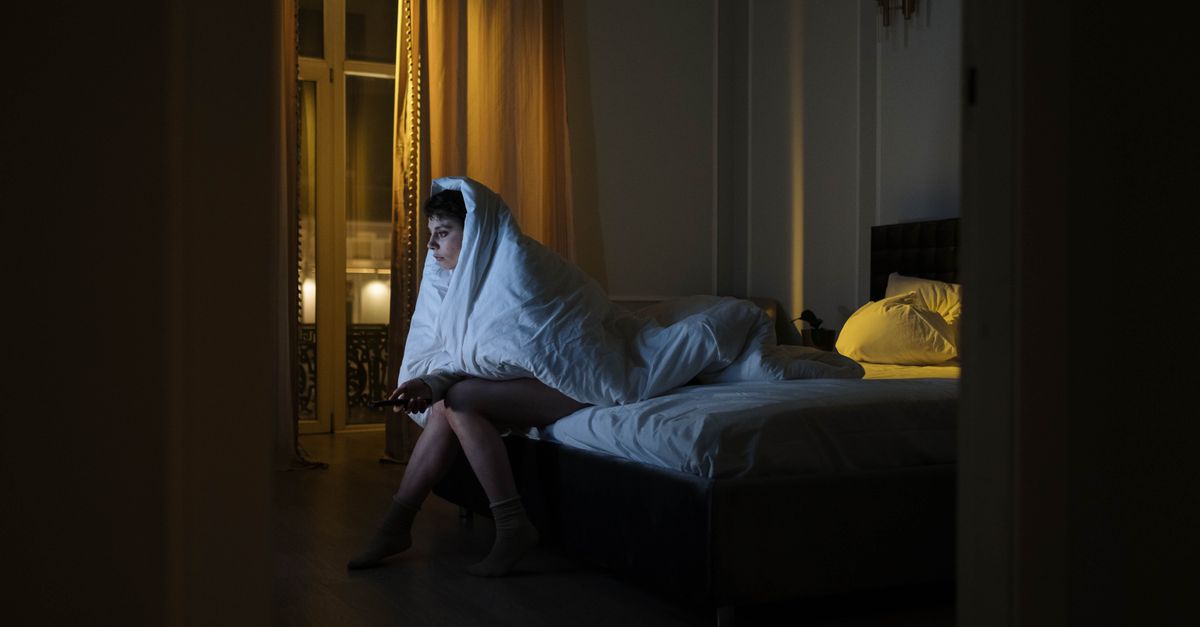
The episode itself usually runs a few minutes. Then comes the part nobody warns you about, which is the chill afterward. Once the sweat evaporates you can feel genuinely cold, sometimes shivering, and that is often what wakes you fully rather than the heat itself. That half of the episode has a mechanism and a set of fixes of its own, which we cover in why cold night sweats wake you shivering. If you get these in the daytime too, the sensation is identical and it starts in the same places, normally the chest, neck and face. There is more on what a flash feels like in hot flash symptoms.
Why nights are harder than days
Three things stack up against you after dark.
- You cannot act early. In the daytime you get a warning, that odd prickle or rising wave, and you can start cooling before it peaks. Asleep, the first thing you know is that you are awake and wet.
- Your body is already trying to cool. Core temperature naturally drops in the evening and stays low overnight. That is part of how sleep gets going and stays going. A system already primed to shed heat does not need much of a push.
- The aftermath keeps you up. Damp nightclothes and a wet patch of sheet keep you cold long after the flash has passed. Fixing it means standing up and switching on a light, which wakes you properly.
There is also the plain fact that three in the morning is a terrible hour for perspective. Lying there hot, then freezing, then wide awake, is where a lot of women first start to feel genuinely frightened about what is happening to their bodies.
What the broken sleep costs you
A night sweat does not have to wake you fully to take something from you. Each one tends to pull you up out of deeper sleep into a lighter stage, and repeated arousals across a night reduce how much deep and dreaming sleep you get, including on nights you would describe as fine. Three or four of those, several nights a week, adds up fast.
By day it shows up as flat exhaustion that coffee does not touch, a very short fuse, trouble holding a thought long enough to finish it, and a much stronger pull toward sugar. Plenty of women put all of that down to age or work stress and never connect it back to the sweats. If tiredness is your loudest symptom, there is more in perimenopause fatigue.
How much of the low mood and fogginess of perimenopause comes straight from the hormone changes, and how much comes from months of shredded sleep, is not settled. It is probably both, tangled together. What is clear is that sleeping better makes everything else more bearable.
Cooling the room and the bed
This part is unglamorous and it works. Most bedrooms are set too warm for a body that has lost its tolerance for heat.
- Turn the thermostat down further than feels natural. Around 65 degrees Fahrenheit is a common suggestion for sleep in general, and many women in perimenopause do better a few degrees below that.
- Split the bedding. One shared heavy comforter is the enemy. Two lighter separate covers mean you can throw yours off without stripping your partner.
- Put natural fibers next to your skin. Cotton and linen breathe. Polyester and satin hold heat and moisture against you. Wicking sleepwear made for sport suits some women well.
- Check what your mattress is doing. Memory foam holds body heat. A cotton protector or a cooling pad on top makes a real difference without buying a new bed.
- Run a fan. Moving air speeds evaporation, and the noise covers the small sounds that would otherwise keep you awake once you are up.
- Keep cold water and a face cloth on the nightstand. A few sips and a damp cloth on the back of your neck shortens the miserable stretch.
The single most useful thing you can do: keep a dry top, a spare pillowcase and a folded towel within arm’s reach of the bed. When you wake soaked you can swap them and lie back down inside a minute without turning on the overhead light. Bright light tells your brain it is morning, and that is usually what turns a five minute interruption into an hour of staring at the ceiling.
Evening habits worth testing
Triggers vary enormously between women, so treat these as experiments rather than rules. Try one at a time. No clinical trial has yet tested avoiding them, as our look at what perimenopause and diet research has actually tested explains, which is why a careful personal experiment is the honest approach.
- Alcohol. Wine in the evening is one of the most commonly reported triggers, and it fragments the second half of the night all on its own. Two weeks without it is a fair test.
- Late, heavy or spicy meals. Digesting a big dinner raises your core temperature. Eating earlier gives that time to settle before you lie down.
- Caffeine timing. Caffeine lingers for many hours. Moving your last cup to early afternoon costs nothing to try.
- Hot baths right before bed. A warm bath earlier in the evening can help you cool down afterward, but going straight from hot water into bed does not.
- A steady wake time, even after a bad night. Getting up at the same hour protects the following night more than sleeping in does.
Keep a rough note for two weeks. One line each morning about the evening before and how many times you woke. Patterns show up quickly, and yours may look nothing like anyone else’s. If the bad nights seem to land in the days just before your period, that timing has some research behind it, which we set out in why flushes cluster around a period in your forties.
Is it perimenopause, or something else?
In your forties and early fifties, hormones are far and away the most likely explanation. But night sweats are not exclusively hormonal, and it is worth knowing what does not fit the usual picture.
| What you notice | Fits the usual perimenopause pattern | Worth raising with a doctor |
|---|---|---|
| Timing | Short waves of heat, a few minutes each, once or several times a night | Constant heavy sweating all night regardless of room temperature |
| Age and cycle | Forties or early fifties, periods changing or still regular | Under 40, or new sweats after a full year with no periods |
| Company it keeps | Daytime flashes, mood changes, disturbed sleep | Fever, weight loss you did not intend, a lump, a cough that lingers |
| Breathing | Quiet sleep, no reports of snoring | Loud snoring, gasping, or breathing pauses a partner has noticed |
| Medicines | No recent changes | Sweats began within weeks of starting something new |
Thyroid problems, infections, sleep apnea, anxiety and several common prescription medicines can all produce night sweats. None of that is a reason to panic. It is a reason to mention the sweats out loud rather than assuming you already know the answer.
Treatments worth asking about
I have no medical training, so take this as a list of things to raise at an appointment, not as advice. Hormone therapy is generally regarded as the most effective treatment for hot flashes and night sweats. Whether it suits you depends on your own history, and it is a conversation rather than a foregone conclusion in either direction.
If hormones are not an option or not what you want, there are nonhormonal prescription medicines used specifically for these symptoms, including certain antidepressants prescribed for flashes rather than for mood, and a newer class that acts on the brain’s temperature signaling. There is also solid support for cognitive behavioral therapy, both for insomnia and for reducing how much the flashes bother you. That sounds soft and it is not. Nothing here is something to start or stop on your own, and doses belong in a consulting room, not on a website.
On supplements, the evidence is a lot thinner than the packaging suggests, and a few interact with prescription medicines. There is a fuller look at what does and does not hold up in perimenopause supplements. The herb by herb picture, with the strongest trial behind each remedy and the null results left in, is set out in what the trials actually found on natural relief for hot flashes.
When to see a doctor
Book an appointment reasonably promptly if any of these apply.
- Drenching sweats alongside fever, chills, or a cough that will not clear
- Weight loss you did not intend and cannot explain
- A new lump, or swollen glands in your neck, armpit or groin
- Sweats with a racing heart, tremor, or feeling hot all the time, which can point toward the thyroid
- Loud snoring, gasping or breathing pauses that a partner has noticed
- Any vaginal bleeding after twelve months with no period at all
- Sweats that started soon after a new prescription
Beyond red flags, sleep loss on its own is a legitimate reason to go. If you are waking three or more nights a week and dragging through your days, that is enough. If you have already been to a doctor and left feeling dismissed, particularly if you were told you are too young for this, that happens a lot and it is worth going back or seeing someone else.
What to do next
Start with the free changes, because they work faster than anything you can order.
- Tonight: drop the thermostat, split the bedding, and put a dry top and a towel within reach of the bed.
- This week: move your last coffee earlier, eat dinner sooner, and leave the evening glass of wine alone.
- For two weeks: write one line each morning about the night before and how many times you woke.
- Then decide: if you are still waking three or more nights a week, take those two weeks of notes to an appointment. Written notes make a short appointment far more useful than trying to remember on the spot.
Night sweats are one of the more grinding parts of this whole business, partly because they hit you when you are least able to cope and partly because so little of it gets talked about out loud. They do not last forever, though they often last longer than anyone tells you. In the meantime, a colder room and a dry shirt within arm’s reach will buy back more sleep than you expect.
Frequently asked questions
Are night sweats always a sign of menopause?
No, though in your forties and early fifties hormones are the most likely explanation by a wide margin. Infections, thyroid problems, sleep apnea, anxiety and some prescription medicines can all cause night sweats. The pattern matters. Short waves of heat several times a night fits perimenopause. Constant drenching sweats with fever or weight loss does not.
How long do night sweats last in perimenopause?
Longer than most women expect. For many they carry on for several years, often continuing past the final period rather than stopping neatly with it. Some women get them for a year or two, others for closer to a decade. There is no reliable way to predict which you will be, which is part of why treating them is reasonable rather than waiting.
What temperature should my bedroom be?
Cooler than you probably keep it. Around 65 degrees Fahrenheit is a common recommendation for sleep generally, and many women in perimenopause find they do better a few degrees below that. The exact number matters less than the direction. If you are perfectly comfortable when you get into bed, the room is likely too warm.
Can I have night sweats if my periods are still regular?
Yes. Night sweats can start while your cycle still looks completely normal on a calendar. Hormone levels fluctuate for years before periods become obviously irregular, and vasomotor symptoms are often among the earliest signs. A regular cycle does not rule out perimenopause, and being told that it does is a very common frustration.
Does alcohol make night sweats worse?
For many women, yes. Alcohol widens blood vessels near the skin and can trigger a flash within a couple of hours, which is roughly when you are falling asleep. It also disrupts the second half of the night on its own. Not everyone reacts the same way, so test it. Two weeks without evening drinks gives a clear answer.
Why do I wake up just before the sweat starts?
This is common and not fully understood. One likely explanation is that the waking and the flash are part of the same event, with the brain surfacing you out of deeper sleep at the same moment it triggers the heat response. Whatever the mechanism, waking a beat early is normal and does not mean something else is wrong.
This article is general information, not medical advice, and is not a substitute for care from a qualified healthcare professional. Speak to your doctor about your own situation.

Leave a Reply