
Ask how long does perimenopause last and you will get four answers from four sources, because they are not counting the same thing. The Menopause Society says roughly four to eight years. The NHS says symptoms usually last seven to nine. One large US cohort measured a median of 7.4 years of frequent hot flushes.
Why does every source give a different number?
The numbers are not in conflict about bodies. They are in conflict about definitions. Some count the years of shifting cycles that end at your last period. Some count the years you have symptoms, which can begin before the cycles change and carry on long after the bleeding stops. And at least one adds a year on the end, because a respected definition says perimenopause is not over until twelve months after that final period. The Menopause Society glossary takes that longer view. The Cleveland Clinic page stops the clock at the last period. Same woman, two stopwatches, and only one of them has been told about the extra lap.
That page is worth a second look, because it manages to disagree with itself inside two paragraphs. It says perimenopause begins about eight to 10 years before menopause, and then that the average length of perimenopause is about four years. Both sentences were sitting there when this article was checked on 11 September 2026. If the page that ranks cannot reconcile its own two numbers, the reader who arrived wanting one number is not being unreasonable.
What do the sources actually say, and what is each one measuring?
Here is every figure this article could verify at its own source, with what that figure is counting set beside it. The last column is the day the wording was read, not the day the source was written.
| Source | The number it gives | What it is actually measuring | Checked |
|---|---|---|---|
| The Menopause Society | Roughly 4 to 8 years | Time spent in the perimenopausal phase | 11 Sep 2026 |
| NHS symptoms page | Symptoms usually last 7 to 9 years, sometimes longer | Symptoms, not cycles, and not anchored to the last period | 11 Sep 2026 |
| US Office on Women’s Health | 4 years on average, and separately 2 to 8 years. Hot flushes an average of 9 years and up to 14 | Two different things on one page, the cycle transition and the symptoms | 11 Sep 2026 |
| Cleveland Clinic | Begins 8 to 10 years before menopause. Average length about 4 years, up to 8 | Both at once, in two paragraphs that do not agree | 11 Sep 2026 |
| Avis and colleagues, JAMA Internal Medicine, 2015 | Median 7.4 years, with 4.5 years continuing after the final period | Frequent hot flushes and night sweats in 1,449 women who had them | 11 Sep 2026 |
| Harlow, Obstetrics and Gynecology Clinics of North America, 2018 | Median 4.4 to 8.6 years by age at onset. An older estimate put it at 4.8 years | The menstrual transition itself, counted from cycle records | 11 Sep 2026 |
| STRAW+10 staging, Menopause, 2012 | No total at all. The late transition averages 1 to 3 years | Stages, which is a different question from a duration | 11 Sep 2026 |
Read down the middle column and the disagreement stops looking like one. Four years and nine years are answers to two different questions. The pages that rank for this search pick one number and print it without saying which question it answers, which is how a reader ends up feeling her own body is running late.
How long does the cycle side of perimenopause last?
The changes in your periods during perimenopause can continue for several years, but every woman experiences it differently.
At first, your periods may still seem fairly normal, but you might notice that your cycle becomes a little shorter or longer, or that your bleeding is heavier or lighter than usual.
As perimenopause progresses, periods often become more unpredictable. You may skip a period, have longer gaps between periods, or notice that your usual cycle pattern has changed.
Eventually, periods stop completely. Menopause is officially reached when you have gone 12 months without a period.
For many women, perimenopause lasts around 4 years, but it can be shorter or last longer. There is no exact timeline that applies to everyone.
And having regular periods does not automatically mean you are not in early perimenopause. Your overall cycle pattern, symptoms, and other factors all matter.
When does perimenopause actually end?
Perimenopause can feel like a confusing phase because there isn’t a clear day when you suddenly know, “Okay, it’s over now.”
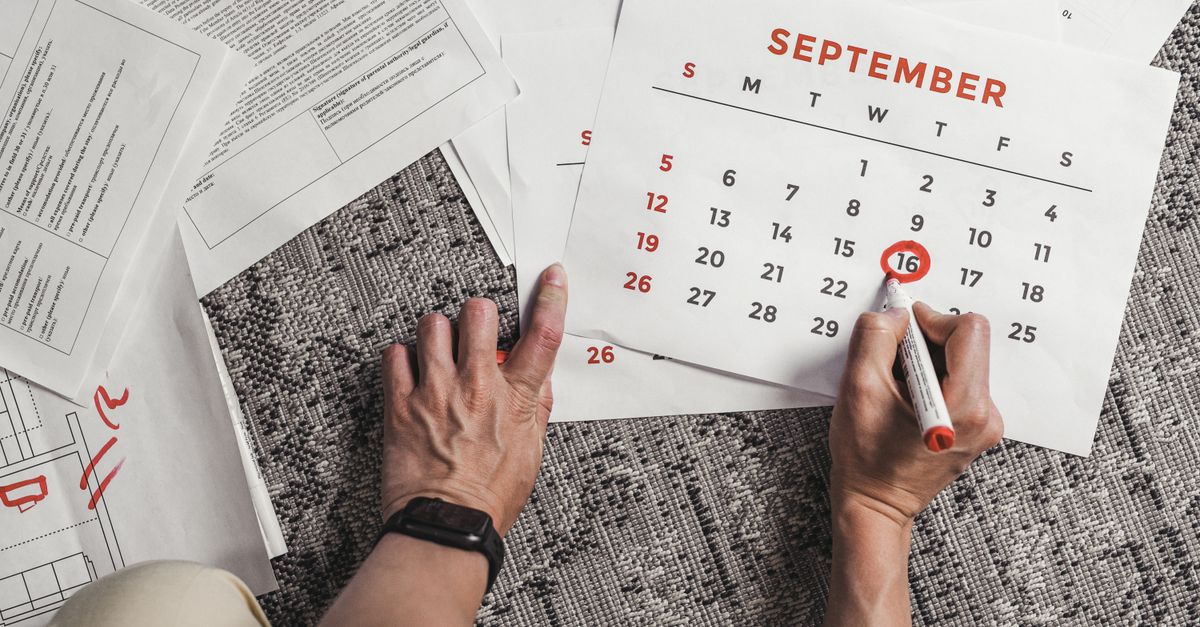
It officially ends with your final menstrual period. But there’s a catch—you only know that a particular period was your last one after you’ve gone 12 full months without having another period.
Think of it as a gradual transition rather than a switch being turned off.
- Perimenopause: Your periods are still coming, but they may become irregular, lighter, heavier, shorter, or longer. You may also notice symptoms such as hot flashes, mood changes, sleep problems or changes in your usual energy.
- Menopause: You have gone 12 months without a period.
- Postmenopause: This is the stage after menopause.
For many women, this waiting period can feel frustrating because you don’t know exactly where you are in the process. Your body is changing, but there is no exact date on the calendar telling you when the transition will finish.
And importantly, everyone experiences perimenopause differently. For some women it lasts a few years, while for others it can last longer. Starting perimenopause earlier does not necessarily mean that you will go through it for a longer time.
The important thing to remember is that there is no “right” timeline. Your body has its own pace, and the changes you experience along the way can be completely different from what another woman experiences.
What do women who have been through it report?
Guidance pages describe a clock that runs once. Public discussion threads describe a clock that keeps getting reset. Reading three threads in full in the r/Menopause community, carrying roughly 120 comments between them, one thing came up again and again that no ranking page mentions: the twelve month count starts over on any bleed, and for a lot of people it does.
In a thread posted around December 2025 about restarting the clock after nine months, a poster aged 55 described a last period in March 2025 and then bleeding again at Christmas, putting her count back to day one. In the same thread a subreddit moderator described reaching twelve full months with no bleeding at 55, then a five day period at the twelve and a half month mark, and reaching the twelve month mark again at 57. Two years added to the same person’s answer, by one period.
In a thread from late 2025 asking readers how old they were at their last period, one commenter described seven years of irregular cycles with gaps of eleven, eight and nine months, each one ended by a period arriving. Another said her periods stopped for six months at 55, restarted, and had then been absent for almost eight months. In a thread from around February 2026 asking at what age symptoms stop, a commenter reported seventeen years of hot flushes, and the person who started the thread said her 58 year old mother had been told by a gynaecologist it was too late to be having symptoms at her age.
The range cuts both ways, and showing only the long end would be dishonest. The same threads carry plenty of short transitions, with last periods reported at 38, 39, 40, 41 and 44. Across one thread the reported ages at a final period ran from the twenties to 59, which is a wider spread than any published average implies and exactly what you would expect from people who joined a menopause community because something was happening to them.
Where the accounts and the guidance agree: the official sources do say the spread is wide, and the finding that an earlier start predicts a longer run matches what people describe. Where they part company: no guidance page explains that one bleed can push the twelve month endpoint back by a year, which is the mechanism underneath most of the posts asking how much longer this is going to go on. These are accounts of what people report, not evidence of what is typical, and none of them describes what is happening in any individual body. Bleeding that returns after twelve clear months is something to have looked at by a doctor rather than something to count.

Does starting earlier mean a longer perimenopause?
This is the one point where the sources line up. SWAN followed 3,302 women in the United States and analysed the 1,449 who had frequent hot flushes or night sweats. Avis and colleagues reported in JAMA Internal Medicine in 2015 a median total duration of 7.4 years, with a median 4.5 years of symptoms continuing after the final period. Women who were premenopausal or early perimenopausal when frequent symptoms began had a median above 11.8 years. Women whose symptoms started only after their final period had a median of 3.4 years. Duration also varied by group, with a median of 10.1 years among African American participants and 4.8 years among Japanese participants.
Harlow’s review points the same way from the cycle side: later onset is associated with a shorter transition. So if your cycles started shifting in your late thirties or early forties, the honest expectation is longer rather than shorter. That is not what anybody wants to read, and it is still better than being ambushed by year seven. We have written separately about the age perimenopause usually starts and about the average age of menopause itself.
What number should you actually plan around?
Not a number. A range, plus a sense of which end you are probably on. Early cycle changes point to the long end, first changes at 48 or 49 tend to point shorter. And keep the two clocks apart: when the NHS says seven to nine years it is describing symptoms, which can run on after the periods have stopped, while the four year figure is describing cycles. Measuring a symptom timeline against a cycle average is how a perfectly ordinary experience starts to feel abnormal.
One more thing changes how the waiting feels, and almost nobody is told it in advance: symptoms do not hold steady for whatever number of years you are handed. They arrive in waves, with quiet stretches long enough to make you doubt the whole idea, which we have set out in why perimenopause symptoms come and go and then come back.
Frequently asked questions
Can perimenopause last more than ten years?
Yes, and it is well documented. SWAN found a median above 11.8 years of frequent hot flushes in women whose symptoms began while they were still premenopausal or early perimenopausal, and Harlow’s review reports transitions running to 8.6 years and beyond in women with an early onset. A long run is unusual against the four year average and it is not rare.
If my period comes back after ten months, does the twelve month count start again?
Under the standard definition, yes. Menopause is confirmed after twelve consecutive months with no bleeding at all, so a period at month ten puts the count back to day one. Spotting counts too. Bleeding that returns after a full twelve clear months is a different matter and is worth having checked by a doctor rather than restarting the count on your own.
How long do hot flushes carry on after periods stop?
In the SWAN analysis, frequent hot flushes and night sweats continued for a median of 4.5 years after the final menstrual period among the women who had them. The NHS describes symptoms that can persist and change after periods end. Neither figure is a prediction for any individual, and neither describes women who never had frequent vasomotor symptoms in the first place.
Is there a test that tells me how far through perimenopause I am?
No. Hormone levels swing widely from day to day during the transition, so a single reading describes the hour it was taken and not the stage you are in. There is more on what a result can and cannot show in our piece on a hormone test that comes back normal.
Why do some pages say eight to ten years before menopause?
Because that sentence is answering a different question: how far ahead of the final period the earliest changes can begin, rather than how long the average transition runs. The Cleveland Clinic page carries both that figure and a four year average, which is confusing to read and is not actually a contradiction once you see what each one is counting.
Can perimenopause be staged if I have had a hysterectomy or use hormonal contraception?
Not by cycles. STRAW+10 states directly that its menstrual criteria cannot be applied after a hysterectomy or an endometrial ablation, or in polycystic ovary syndrome, hypothalamic amenorrhoea and some other situations. Hormonal contraception removes the same signal in practice. It does not mean nothing is happening, only that the usual yardstick is unavailable and the conversation has to be a clinical one.
This article is general information, not medical advice, and is not a substitute for care from a qualified healthcare professional. Speak to your doctor about your own situation.

Leave a Reply